Current issue
Online First
Archive
Instructions for Authors
Guide for Authors
Peer Review Policy
Research Ethics Policy
Crossmark Policy
Ghostwriting and Guest Authorship
Copyright
Open Access Policy
Plagiarism
Preprints policy
About the Journal
Aim and Scope
Scientific Board
Publisher
Editorial Board
Indexing in Databases
Personal Data Protection
Repository Policy
AI Policy
Contact

REVIEW PAPER
Nutritional and health-promoting value of selected tree-fungi found in Polish forests: a review
1
Department of Biogeochemistry, Soil Science and Irrigation and Drainage, Faculty of Agriculture and Biotechnology, Bydgoszcz University of Science and Technology, Poland
Submission date: 2025-06-27
Final revision date: 2025-12-14
Acceptance date: 2025-12-15
Online publication date: 2025-12-19
Publication date: 2025-12-19
Corresponding author
Wojciech Kozera
Department of Biogeochemistry, Soil Science and Irrigation and Drainage, Faculty of Agriculture and Biotechnology, Bydgoszcz University of Science and Technology, Bernardyńska, 85-029, Bydgoszcz, Poland
Department of Biogeochemistry, Soil Science and Irrigation and Drainage, Faculty of Agriculture and Biotechnology, Bydgoszcz University of Science and Technology, Bernardyńska, 85-029, Bydgoszcz, Poland
Journal of Research and Applications in Agricultural Engineering 2025;70(2):29-38

KEYWORDS
TOPICS
ABSTRACT
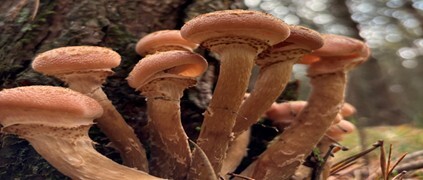
Mushrooms have been an important part of the human diet for thousands of years. In many cultures, they are not only a source of food but also a raw material with medicinal potential. Their unique structure and chemical composition make them an interesting subject of research in the fields of nutrition, food technology, and medicine. Currently, there is a growing interest in mushrooms as functional foods that can contribute to health improvement and support the body in fighting diseases. A possible hazard linked to eating tree-growing fungi is the accumulation of heavy metals in their fruiting bodies, as these organisms have a strong ability to bioaccumulate such elements. For this reason, it is essential to avoid collecting fungi from polluted areas and to respect recommended safety limits for single servings. Despite certain restrictions—especially concerning vulnerable groups such as children—fungi can still be considered a functional food with health-promoting properties. While in vitro studies on tree fungi have revealed a rich diversity of biologically active metabolites, translation of these findings to in vivo or clinical efficacy remains limited to a few well-studied examples. The aim of this study was to assess the current state of knowledge on the chemical composition and biological potential of selected Polish species of wood-inhabiting mushrooms (Laetiporus sulphureus, Pleurotus pulmonarius, Pseudohydnum gelatinosum, Sparassis crispa, Armillaria, and Tricholomopsis rutilans in the context of their nutritional and therapeutic applications.
REFERENCES (51)
1.
Chong P. S., Fung M. L., Wong K. H. & Lim L. W.: Therapeutic potential of Hericium erinaceus for depressive disorder. International Journal of Molecular Sciences, 2020, 21, 163. https://doi.org/10.3390/ijms21....
2.
Siwulski M., Sobieralski K. & Sas-Golak I.: Nutritive and health-promoting value of mushrooms. Żywność. Nauka. Technologia. Jakość, 2014, 1(92), 16–28.
3.
Florczak J., Karmańska, A. & Karwowski B.: Some components of Laetiporus sulphureus (Bull.) Murrill. Bromatologia i Chemia Toksykologiczna, 2015, 48(2), 210–215.
4.
Szymański M., Kolendowicz M. & Szymański A.: Chemical composition and biological activity of Laetiporus sulphureus (Bull.). Postępy Fitoterapii, 2021 2, 106–113. https://doi.org/10.25121/PF.20....
5.
Kuo M. Laetiporus sulphureus. Retrieved from the MushroomExpert.Com Web site: http://www.mushroomexpert.com/... (accessed on 20. 07. 2025).
6.
Petrović J., Stojković D., Reis F. S., Barros L., Glamočlija J., Ćirić A., Ferreira I. C. F. R., & Soković M.: Study on chemical, bioactive and food preserving properties of Laetiporus sulphureus (Bull.: Fr.) Murr. Food & Function, 2014, 5(7), 1441–1451. https://doi.org/10.1039/C4FO00....
7.
Adamska I.: The possibility of using sulphur shelf fungus (Laetiporus sulphureus) in the food industry and in medicine—a review. Foods, 2023, 12, 1539. https://doi.org/10.3390/foods1....
8.
Novaković A., Karaman M., Šojić B., Ikonić P., Peulić T., Tomić J. & Šipovac M.: From forest to fork: antioxidant and antimicrobial potential of Laetiporus sulphureus (Bull.) Murrill in cooked sausages. Microorganisms, 2025, 13(8), 1832. https://doi.org/10.3390/microo... .
9.
Jiang H., Gao L., Hu X., Fu J. & Zhang J.: Identification and nutrient composition of a wild Pleurotus pulmonarius strain from Tibet, and the antioxidant and cytotoxic activities of polysaccharides from this fungus. Foods, 2025, 14(7), 1198. https://doi.org/10.3390/foods1....
10.
Kumar R., Tapwal A., Bisht N. S., Pandey S. & Rishi R.: Nutritive value and cultivation of Pleurotus pulmonarius, an edible mushroom from Nagaland, India. Indian Forester, 2015, 141(9).
11.
Obiaigwe J. A., Adenipekun C. O., Egbewale S. O. & Aruwa G.: Growth, yield, and nutritional quality of Pleurotus pulmonarius and Pleurotus ostreatus grown on different substrates amended with wheat bran. Biotechnology Journal International, 2023, 27(4), 46–60.
12.
Sharma K., et al.: Medicinal, nutritional, and nutraceutical potential of Sparassis crispa s. lat.: a review. IMA Fungus, 2022, article no 8.
13.
Ohno N., Miura N. N. & Yadomae T.: Antitumor 1,3-β-glucan from cultured fruit bodies of Sparassis crispa. Biological and Pharmaceutical Bulletin, 2000, 23(7), 866–872.
14.
Zhao X. et al.: Rapid characterization of chemical components in edible mushroom Sparassis crispa by UPLC–Orbitrap MS analysis and potential inhibitory effects on allergic rhinitis. Molecules,, 2019, 24(16), 3014. https://doi.org/10.3390/molecu....
15.
Florczak J., Osiecka M. & Wędzisz A.: Skład chemiczny i aktywność celulolityczna szmaciaka gałęzistego Sparassis crispa. Bromatologia i Chemia Toksykologiczna, 2007, 40(3), 245–248.
16.
Singh A., Saini R. K., Kumar A., Chawla P. & Kaushik R.: Mushrooms as nutritional powerhouses: A review of their bioactive compounds, health benefits, and value-added products. Foods, 2025, 14 (5), 741. https://doi.org/10.3390/foods1....
17.
Żółciak A.: Armillaria species in coniferous stands. Acta Mycologica, 2007, 42(2), 93–102. https://doi.org/10.5586/am.200....
18.
Petrović N., Kosanović M., Tosti T., Srbljak I. & Đurić A.: Analysis of the chemical and medicinal properties of Armillaria ostoyae (Agaricomycetes) extracts and the presence of heavy metals in dry basidiocarps. International Journal of Medicinal Mushrooms, 2024, 26(9), 33-50. https://pubmed.ncbi.nlm.nih.go....
19.
Wong J. H., Ng T. B., Chan H. H. L., Liu Q., Man G. C. W., Zhang C. Z., Guan S., Ng C. C. W., Fang E. F., Wang H., et al.: Mushroom extracts and compounds with suppressive action on breast cancer: Evidence from studies using cultured cancer cells, tumor-bearing animals, and clinical trials. Applied Microbiology and Biotechnology, 2020, 104(11), 4675–4703. https://doi.org/10.1007/s00253....
20.
Siu K. C., Xu L., Chen X. & Wu J.: Molecular properties and antioxidant activities of polysaccharides isolated from alkaline extract of wild Armillaria ostoyae mushrooms. Carbohydrate Polymers, 2016, vol. 137, 739-746. https://doi.org/10.1016/j.carb....
21.
Lech, P., & Żółciak, A. Influence of elevated CO₂ concentrations on the growth of Armillaria ostoyae (Romagn.) Herink rhizomorphs in vitro. Forest Research Papers, 2017 78(3), 191–197.
22.
Szewczyk W., Kwaśna H., Bocianowski J., Behnke-Borowczyk J., Ratajczak A. & Świetlik A.: Diversity of Armillaria ostoyae in Scots pine plantations in Poland. Dendrobiology, 2014, 72, 125–137. https://www.idpan.poznan.pl/en....
23.
Cooper J. A. & Park D.: The fungal genus Tricholomopsis (Agaricales) in New Zealand, including Tricholomopsis scabra sp. nov. Phytotaxa, 2016, 288(1), 69–76. doi:10.11646/phytotaxa.288.1.7.
24.
Işık H., Türkekul İ., Bengü A. Ş. & Çınar Yılmaz H.: Determination of fatty acid profile and mineral contents of Tricholomopsis rutilans collected from Yozgat. Anatolian Journal of Botany, 2019, 3(2), 64–68. https://doi.org/10.30616/ajb.6....
25.
Mirończuk-Chodakowska I., Witkowska A. M., Zujko M. E. & Terlikowska K. M.: Quantitative evaluation of 1,3–1,6-β-D-glucan contents in wild growing species of edible Polish mushrooms. Roczniki Państwowego Zakładu Higieny, 2017, 68(3), 281– 290. https://pubmed.ncbi.nlm.nih.go....
26.
Sidor A.: Nutritional and health value of fruiting edible mushrooms. Hygeia Public Health, 2019, 54(3), 153–158.
27.
Nwoko M. C. Onyeizu, U. R. Okwulehie I. C. & Ukoima H. N.: Nutritional and bioactive compounds evaluation of Pleurotus pulmonarius (Freis) Quél. fruit bodies grown on different wood logs in Abia State, Nigeria. Journal of Petroleum & Environmental Biotechnology, 2017, 8(2), Article 325.
28.
Muszyńska B., Sułkowska-Ziaja K. & Ekiert H.: The main groups of biologically active compounds and elements in some species of mushrooms from Basidiomycota taxon. Farmacja Polska, 2010, 66(11), 804–814.
29.
Cheung P. C. K.: Mini-review on edible mushrooms as source of dietary fiber: Preparation and health benefits. Food Science & Human Wellness, 2013, 2(3), 162–166. http://doi.org/10.1016/j.fshw.....
30.
Ayimbila F. & Keawsompong S.: Nutritional quality and biological application of mushroom protein as a novel protein alternative. Current Nutrition Reports, 2023, 12, 290–307. https://doi.org/10.1007/s13668....
31.
Dabbour I. R. & Takruri H. R.: Protein digestibility using corrected amino acid score method (PDCAAS) of four types of mushrooms grown in Jordan. Plant Foods for Human Nutrition, 2002, 57(1), 13–24. https://doi.org/10.1023/A:1013....
32.
Ribeiro B., Andrade P. B., Silva B. M., Baptista P., Seabra R. M. & Valentão P.: Comparative study on free amino acid composition of wild edible mushroom species. Journal of Agricultural and Food Chemistry, 2008, 56(22), 10973–10979. https://doi.org/10.1021/jf8020....
33.
Yu Q., Guo M., Zhang B., Wu H., Zhang Y. & Zhang L.: Analysis of nutritional composition in 23 kinds of edible fungi. Journal of Food Quality, 2020, Article 8821315. https://doi.org/10.1155/2020/8....
34.
Calder P. C.: Functional roles of fatty acids and their effects on human health. Journal of Parenteral and Enteral Nutrition, 2015, 39(1), 18–32. https://doi.org/10.1177/014860....
35.
Doğan H. H. & Akbaş G.: Biological activity and fatty acid composition of Caesar’s mushroom. Pharmaceutical Biology, 2013, 51(7), 863–871. https://doi.org/10.3109/138802....
36.
Sułkowska-Ziaja K., Hałaszuk P., Mastej M., Piechaczek M. & Muszyńska B.: Mycosteroles – characteristics and biological importance. Medicina Internacia Revuo, 2016, 27(106), 26–34.
37.
Assemie A. & Abaya G.: The effect of edible mushroom on health and their biochemistry. International Journal of Microbiology, 2022, Article 8744788. https://doi.org/10.1155/2022/8....
38.
Cardwell G., Bornman J. F., James A. P. & Black L. J.: Review of mushrooms as a potential source of dietary vitamin D. Nutrients, 2018, 10(10), 1498. https://doi.org/10.3390/nu1010....
39.
Barros L., Cruz T., Baptista P., Estevinho L. M. & Ferreira I. C. F. R.: Wild and commercial mushrooms as a source of nutrients and nutraceuticals. Food and Chemical Toxicology, 2008, 46(8), 2742–2747. https://doi.org/10.1016/j.fct.....
40.
Mleczek M., Niedzielski P., Kalač P., Budka A., Siwulski M., Gąsecka M., Rzymski P., Magdziak Z., & Sobieralski K.: Multielemental analysis of 20 mushroom species growing near a heavily trafficked road in Poland. Environmental Science and Pollution Research, 2016, 23, 16280–16295. https://doi.org/10.1007/s11356....
41.
Demková L., Árvay J., Hauptvogl M., Michalková J., Šnirc M., Harangozo Ľ., Bobuľská L., Bajčan D. & Kunca V.: Mercury content in three edible wild-growing mushroom species from different environmentally loaded areas in Slovakia: An ecological and human health risk assessment. Journal of Fungi, 2021, 7(6), 434. https://doi.org/10.3390/jof706....
42.
Pemberton R. T.: Agglutinins (lectins) from some British higher fungi. Mycological Research, 1994, 98(3), 277–290. https://doi.org/10.1016/S0953-....
43.
Ribeiro B., Rangel J., Valentão P., Baptista P., Seabra R. M. & Andrade P. B.: Contents of carboxylic acids and two phenolics and antioxidant activity of dried Portuguese wild edible mushrooms. Journal of Agricultural and Food Chemistry, 2006, 54(22), 8530–8537. https://doi.org/10.1021/jf0618....
44.
Kołodziejczyk J., Jastrzębska I. & Malinowska M.: Medical potential of arboreal fungi. Prospects in Pharmaceutical Sciences, 2024, 22(3), 142–151.
45.
Dawadi E., Magar P. B., Bhandari S., Subedi S., Shrestha S. & Shrestha J.: Nutritional and post-harvest quality preservation of mushrooms: A review. Heliyon, 2022, 8, e12093. https://doi.org/10.1016/j.heli....
46.
Golak-Siwulska I., Kałużewicz A., Spiżewski T., Siwulski M. & Sobieralski K.: Bioactive compounds and medicinal properties of oyster mushrooms (Pleurotus sp.). Folia Horticulturae, 2018, 30(2), 191–201. https://doi.org/10.2478/fhort-....
47.
Kochan Z., Jędrzejewska K. & Karbowska J.: Vitamin D in edible mushrooms: Biosynthesis, contents, bioavailability, and nutritional significance. Advances in Hygiene and Experimental Medicine, 2019, 73, 662–673.
48.
Bołonkowska O., Pietrosiuk A. & Sykłowska-Baranek K.: Plant dyes, their biological activity and production in vitro cultures. Prospects in Pharmaceutical Sciences, 2011, 9(1): 1–27. https://doi.org/10.56782/pps.8....
49.
Leowattana W., Leowattana P., Leowattana T.: Pleuromutilin and its derivatives: promising novel anti-infective agents. Anti-Infective Agents, 2022, 20(2): 28–37. https://dx.doi.org/10.2174/221....
50.
Deveci E., Çayan F., Tel‐Çayan G., Duru M., E.: Structural characterization and determination of biological activities for different extracted from tree mushroom species. Journal Food Biochemistry, 2019, 43. https://doi.org/10.1111/jfbc.1....
51.
Hilszczańska D.: Medicinal properties of macrofungi. Forest Research Papers, 2012, 73(4): 347–353.
Share
RELATED ARTICLE
| eISSN: | 2719-423X |
| ISSN: | 1642-686X |

We process personal data collected when visiting the website. The function of obtaining information about users and their behavior is carried out by voluntarily entered information in forms and saving cookies in end devices. Data, including cookies, are used to provide services, improve the user experience and to analyze the traffic in accordance with the Privacy policy. Data are also collected and processed by Google Analytics tool (more).
You can change cookies settings in your browser. Restricted use of cookies in the browser configuration may affect some functionalities of the website.
You can change cookies settings in your browser. Restricted use of cookies in the browser configuration may affect some functionalities of the website.